Education
Classroom Events: The Ultimate Guide to Fun, Educational, and Memorable Learning Experiences


Classroom events play an essential role in creating an engaging, collaborative, and inspiring learning environment where students feel motivated to participate and grow. While traditional classroom instruction focuses on academic content, special events bring learning to life by encouraging creativity, teamwork, communication, leadership, and critical thinking. These experiences transform the classroom into a vibrant community where students actively participate rather than simply receive information.
Well-planned classroom events provide opportunities for students to build meaningful relationships with classmates, celebrate achievements, develop confidence, and apply academic knowledge in practical situations. Whether the event is a science fair, reading competition, cultural celebration, STEM challenge, holiday activity, career day, or community service project, every experience contributes to both educational and personal development.
Teachers also benefit from classroom events because they increase student engagement, improve classroom behavior, encourage parental involvement, and create lasting memories that strengthen the overall school culture. Throughout this guide, you will discover the importance of classroom events, practical planning strategies, creative activity ideas, seasonal celebrations, budgeting tips, common mistakes to avoid, and expert recommendations for making every classroom event successful.
What Are Classroom Events?
Classroom events are organized educational or recreational activities conducted within or around the classroom setting to enhance learning experiences beyond everyday lessons. These events can be academic, cultural, artistic, athletic, seasonal, social, or community-focused. Their primary purpose is to encourage active participation while reinforcing educational objectives in enjoyable and meaningful ways.
Unlike regular lessons, classroom events often involve collaboration, hands-on learning, presentations, games, competitions, guest speakers, creative projects, and group discussions. Students learn through experience, making concepts easier to understand and remember.
Examples include:
- Science fairs
- Reading challenges
- Math competitions
- Cultural festivals
- Earth Day celebrations
- STEM projects
- Holiday parties
- Career exploration days
- Art exhibitions
- Book fairs
- Debate competitions
- Talent shows
- Community service projects
- Classroom Olympics
- Field trip preparation activities
Why Classroom Events Matter
Students remember experiences far longer than lectures alone. Classroom events encourage participation, curiosity, and collaboration while helping learners connect classroom concepts to real-world situations.
Benefits include:
- Higher student engagement
- Better classroom participation
- Stronger teamwork skills
- Improved communication
- Increased confidence
- Greater creativity
- Better attendance
- Positive classroom culture
- Enhanced critical thinking
- Stronger relationships between teachers and students
- More opportunities for leadership
- Increased parent involvement
- Better emotional development
- Improved academic performance
Students who actively participate in classroom events often develop stronger problem-solving skills because they learn by doing rather than only listening.
Types of Classroom Events
Academic Events
Academic events reinforce classroom learning through interactive experiences. Examples include spelling bees, science fairs, math olympiads, geography quizzes, writing contests, and history exhibitions. These events encourage healthy competition while helping students deepen their understanding of academic subjects.
Creative Events
Creative classroom events encourage imagination and self-expression. Art contests, poetry readings, storytelling sessions, music performances, drama productions, and design competitions allow students to showcase their talents while developing confidence and communication skills.
Cultural Celebrations
Cultural events introduce students to diverse traditions, languages, foods, music, clothing, and customs. Celebrating different cultures promotes respect, empathy, and global awareness while creating an inclusive classroom environment where every student feels valued.
STEM Classroom Events
Science, Technology, Engineering, and Mathematics events inspire innovation and problem-solving. Robotics competitions, coding workshops, engineering challenges, and science experiments encourage students to think critically while developing practical skills for future careers.
Reading Events
Reading marathons, author studies, book character dress-up days, reading buddy programs, and classroom book clubs encourage literacy while making reading enjoyable and interactive.
Seasonal Classroom Events
Seasonal celebrations help students connect learning with important holidays and annual events.
Popular examples include:
- Back-to-school welcome day
- Autumn science projects
- Halloween literacy games
- Thanksgiving gratitude activities
- Winter holiday celebrations
- Valentine’s Day kindness projects
- Earth Day environmental activities
- Spring art exhibitions
- End-of-year award ceremonies
How to Plan Successful Classroom Events
Every memorable classroom event begins with thoughtful planning. Start by identifying clear educational goals and deciding how the event will support learning outcomes. Consider the age group, available resources, classroom size, and time constraints before selecting activities.
Develop a realistic timeline that includes preparation, setup, execution, and follow-up reflection. Assign responsibilities to students when appropriate so they gain experience in teamwork and leadership. Gather supplies in advance, communicate expectations clearly, and create contingency plans for unexpected challenges such as schedule changes or limited materials.
After the event, encourage students to reflect on what they learned through discussions, journals, or presentations. Reflection helps reinforce lessons and provides valuable feedback for improving future events.
Creative Classroom Event Ideas
Here are engaging ideas suitable for a variety of grade levels:
- Mystery Reader Day
- Escape Room Learning Challenge
- STEM Building Competition
- International Food Festival
- Book Character Parade
- Historical Figure Presentation
- Science Discovery Day
- Classroom Talent Show
- Career Exploration Fair
- Environmental Awareness Campaign
- Student-Led Workshops
- Kindness Week
- Art Gallery Walk
- Coding Challenge
- Math Treasure Hunt
- Classroom Olympics
- Debate Tournament
- Innovation Fair
- Entrepreneurship Day
- Community Service Project
Each event can be adapted to different subjects and age groups, ensuring that activities remain both educational and enjoyable.
Budget-Friendly Classroom Events
Meaningful classroom events do not require expensive materials. Many successful activities rely on creativity rather than cost. Recycled supplies, donated resources, digital tools, and student-created materials can significantly reduce expenses while still delivering high educational value.
Simple activities such as storytelling circles, classroom debates, collaborative murals, scavenger hunts, reading challenges, and peer teaching sessions require minimal financial investment yet provide rich learning opportunities. Partnering with local libraries, museums, community organizations, or parent volunteers can also expand resources without increasing costs.
Common Mistakes to Avoid
Even well-intentioned classroom events can fall short if planning is overlooked. Avoid these common mistakes:
- Unclear objectives
- Poor time management
- Activities that do not match student age levels
- Limited student participation
- Lack of preparation
- Ignoring safety guidelines
- Overcomplicated schedules
- Insufficient communication with parents
- Forgetting to gather student feedback
- Focusing only on entertainment instead of learning
Thoughtful preparation and reflection help ensure that classroom events remain meaningful, inclusive, and aligned with educational goals.
Measuring Success
Evaluating classroom events helps teachers understand what worked well and what can be improved. Success can be measured through student participation, engagement during activities, quality of completed projects, classroom discussions, surveys, parent feedback, and connections between the event and academic outcomes. Reviewing these indicators after each event allows teachers to refine future plans and create even more rewarding experiences.
Future Trends in Classroom Events
Technology is reshaping classroom events in exciting ways. Virtual guest speakers, interactive online collaborations, digital escape rooms, augmented reality learning experiences, educational gaming, and hybrid classroom celebrations are becoming increasingly common. At the same time, there is growing emphasis on student-led projects, social-emotional learning, sustainability initiatives, and inclusive activities that welcome learners of all backgrounds and abilities. These trends help ensure that classroom events remain engaging and relevant in modern education.
Best Practices for Outstanding Classroom Events
Successful classroom events share several key characteristics. They align with learning objectives, encourage active participation, provide opportunities for collaboration, celebrate student achievement, and foster a positive classroom culture. Teachers who involve students in planning, adapt activities to different learning styles, and reflect on outcomes after each event are more likely to create memorable experiences that support both academic growth and personal development.
Conclusion
Classroom events are far more than enjoyable breaks from routine lessons—they are valuable educational experiences that inspire curiosity, strengthen relationships, and encourage lifelong learning. By combining creativity with clear educational goals, teachers can design events that motivate students, reinforce classroom concepts, and develop essential life skills such as teamwork, communication, leadership, and problem-solving.
Whether planning a simple reading challenge, a school-wide science fair, a cultural celebration, or an innovative STEM competition, every classroom event has the potential to leave a lasting impression. Thoughtful preparation, inclusive activities, and meaningful reflection ensure that these experiences become highlights of the school year while contributing to student success both inside and outside the classroom.
Frequently Asked Questions (FAQ)
1. What are classroom events?
Classroom events are organized educational or recreational activities that enhance learning through hands-on participation, collaboration, and creative engagement.
2. Why are classroom events important?
They improve student engagement, teamwork, communication, creativity, confidence, and academic understanding while creating a positive classroom environment.
3. How often should teachers organize classroom events?
Many teachers schedule small activities monthly and larger events each semester, but the ideal frequency depends on curriculum goals, available time, and school policies.
4. What are some low-cost classroom event ideas?
Reading challenges, classroom debates, scavenger hunts, storytelling sessions, peer teaching, art displays, and recycled-material STEM projects are excellent budget-friendly options.
5. How can classroom events support learning?
By allowing students to apply concepts in real-world contexts, classroom events promote active learning, critical thinking, collaboration, and long-term knowledge retention.
6. How do you make classroom events inclusive?
Provide activities that accommodate different abilities, encourage teamwork, respect diverse cultures and backgrounds, offer multiple ways to participate, and ensure every student has an opportunity to contribute.
7. What role do parents play in classroom events?
Parents can volunteer, share expertise, donate materials, attend presentations, and reinforce learning at home, helping strengthen the connection between school and family.
8. What are the most popular classroom events?
Popular options include science fairs, book fairs, cultural festivals, STEM challenges, talent shows, Earth Day projects, holiday celebrations, career days, and end-of-year award ceremonies.
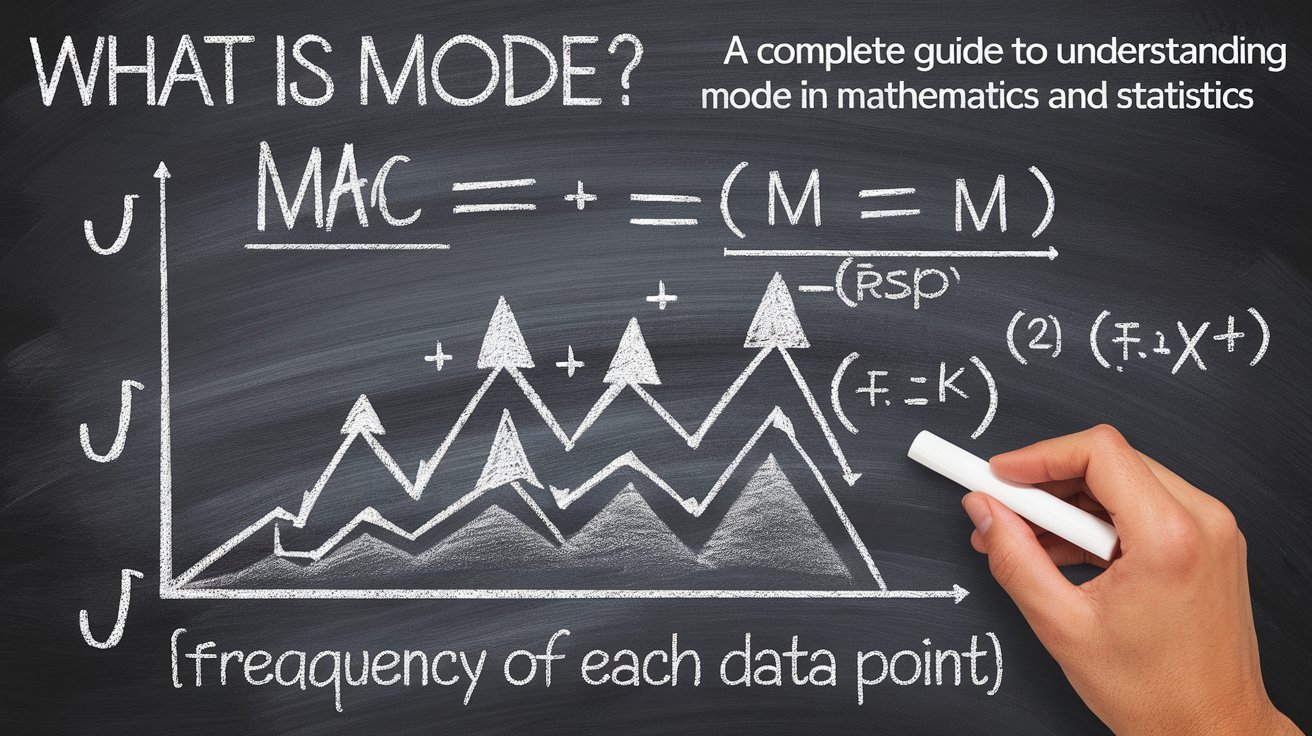
Mathematics is full of concepts that help us understand numbers, organize information, and analyze data. Among these concepts, mode is one of the easiest yet most useful measures of central tendency. Whether you are a student learning statistics for the first time, a teacher explaining mathematical concepts, or someone analyzing business data, understanding what mode is can make interpreting information much easier. Unlike averages that require calculations involving every number in a dataset, the mode simply identifies the value that appears most frequently.
The concept of mode is used in schools, universities, scientific research, healthcare, economics, sports analytics, marketing, and many other industries. Businesses use mode to determine the most popular products, hospitals identify the most common illnesses, and retailers analyze purchasing trends to improve inventory management. Because it identifies the most frequently occurring value, mode often provides insights that other statistical measures cannot.
In this comprehensive guide, you will learn what mode is, how to calculate it, different types of mode, practical examples, comparisons with mean and median, real-world applications, advantages, limitations, and answers to frequently asked questions.
What Is Mode?
The mode is the value that appears most frequently in a set of numbers or data. It is one of the three primary measures of central tendency, alongside the mean and the median.
Unlike the mean, which averages all values, or the median, which identifies the middle value, the mode simply looks for the number that occurs the greatest number of times. Because of its simplicity, it is often the first measure of central tendency introduced in statistics courses.
For example, consider the following numbers:
2, 4, 4, 5, 6, 7, 4, 8
Here, the number 4 appears three times, while every other number appears only once. Therefore, the mode is 4.
Why Is Mode Important?
Mode is important because it identifies the most common observation in a dataset. This makes it especially valuable when understanding customer preferences, popular products, common medical conditions, survey responses, classroom performance, and market trends.
Unlike averages, which may sometimes be affected by extremely high or low values, the mode focuses entirely on frequency. This makes it useful for categorical data where calculating an average may not even be possible.
Formula for Mode
Unlike mean or median, there is no complicated mathematical formula for mode.
The basic process is:
Mode = Value that appears most frequently in the dataset
The steps include:
- Arrange the data.
- Count how many times each value appears.
- Identify the value with the highest frequency.
- That value is the mode.
Examples of Finding Mode
Example 1
Dataset:
12, 15, 15, 18, 20
Frequency:
- 12 → 1
- 15 → 2
- 18 → 1
- 20 → 1
The mode is 15.
Example 2
Dataset:
8, 9, 9, 10, 10, 11
Here:
- 9 appears twice.
- 10 appears twice.
The dataset has two modes:
9 and 10
This is called a bimodal dataset.
Example 3
Dataset:
3, 5, 7, 9
Every number appears once.
There is no mode because no value occurs more frequently than another.
Types of Mode
Unimodal
A dataset with one mode.
Example:
4, 5, 5, 7, 8
Mode = 5
Bimodal
A dataset with two modes.
Example:
3, 3, 5, 5, 7
Modes = 3 and 5
Multimodal
Three or more values share the highest frequency.
Example:
2, 2, 4, 4, 6, 6
Modes = 2, 4, and 6
No Mode
Every value occurs only once.
Example:
1, 2, 3, 4, 5
There is no mode.
Mode in Statistics
In statistics, mode is one of the most commonly used descriptive measures. Researchers often use it to summarize data because it identifies the most frequently occurring observation. For example, in survey research, the mode can reveal the response chosen by the largest number of participants, helping analysts quickly identify popular opinions or preferences. In market research, businesses use the mode to discover which product size, color, or feature customers select most often, making it easier to align inventory and marketing strategies with consumer demand.
Mode vs Mean vs Median
| Measure | Definition | Best Used For |
|---|---|---|
| Mean | Average of all numbers | Normally distributed data |
| Median | Middle value | Data with outliers |
| Mode | Most frequent value | Finding the most common value |
For example:
Data:
2, 3, 3, 4, 8
Mean = 4
Median = 3
Mode = 3
Each measure provides a different perspective on the same dataset, and together they offer a more complete understanding of the data.
Real-Life Applications of Mode
Mode is used in many everyday situations because it highlights the most common outcome. Retail stores analyze sales records to identify the clothing size customers purchase most frequently, allowing them to stock inventory efficiently. Hospitals use mode to determine the most common symptoms or diagnoses among patients, which can improve resource planning. Schools examine test scores to identify the score achieved by the greatest number of students, helping teachers evaluate class performance. Transportation agencies analyze traffic data to identify the most common travel times, while social media platforms use mode to understand the most popular content categories among users. In each case, mode provides a quick and practical way to identify trends without complex calculations.
Advantages of Mode
Mode has several advantages that make it an essential statistical measure. It is very easy to understand and calculate, even for beginners. Unlike the mean, it is not affected by extremely high or low values, making it reliable in datasets with outliers. Mode can also be used with categorical data such as colors, brands, or survey responses where calculating an average would not make sense. Because it identifies the most frequently occurring value, it is especially useful for businesses, researchers, and educators who need to recognize patterns quickly.
Limitations of Mode
Despite its usefulness, mode also has limitations. Some datasets have no mode because every value appears only once, while others may have two or more modes, making interpretation more complex. Additionally, mode does not consider every value in the dataset, so it may not fully represent the overall distribution. For this reason, statisticians often use mode alongside the mean and median to gain a more balanced understanding of the data.
Common Mistakes When Finding Mode
Many students make mistakes by assuming the largest number in a dataset is automatically the mode, but the mode is determined by frequency, not size. Others forget to count repeated values carefully, leading to incorrect results. Another common error is overlooking the possibility of multiple modes or assuming that every dataset must have one. Carefully counting occurrences and checking for ties can help avoid these mistakes.
Tips for Learning Mode
To master the concept of mode, practice with different datasets that include repeated values, multiple repeated values, and datasets with no repeated values. Comparing the mode with the mean and median will also help you understand when each measure is most useful. Real-life examples, such as analyzing favorite colors in a class or the most purchased product in a store, can make the concept easier to remember and apply.
Conclusion
Mode is one of the simplest and most practical measures of central tendency. It identifies the value that appears most frequently in a dataset, making it useful in mathematics, statistics, business, education, healthcare, marketing, and countless other fields. Because it is easy to calculate and interpret, mode is often the first statistical concept students learn, yet it remains valuable for professionals analyzing real-world data. Understanding mode, along with mean and median, provides a strong foundation for interpreting information accurately and making informed decisions based on data.
Frequently Asked Questions (FAQs)
1. What is mode in mathematics?
Mode is the value that appears most frequently in a dataset.
2. How do you calculate mode?
Count how many times each value appears and identify the one with the highest frequency.
3. Can a dataset have more than one mode?
Yes. A dataset can be bimodal (two modes) or multimodal (three or more modes).
4. Can a dataset have no mode?
Yes. If every value appears only once, there is no mode.
5. What is the difference between mean, median, and mode?
The mean is the average, the median is the middle value, and the mode is the most frequently occurring value.
6. Why is mode useful?
Mode helps identify the most common value in a dataset and is widely used in statistics, business, education, healthcare, and market research.
7. Is mode affected by outliers?
No. Since mode depends only on frequency, extreme values do not influence it.
8. Where is mode used in real life?
Mode is used in retail sales, survey analysis, healthcare, education, traffic studies, marketing, sports analytics, and many other fields.
9. Which measure of central tendency is easiest to calculate?
Mode is generally the easiest because it only requires identifying the most frequently occurring value.
10. Is mode important in statistics?
Yes. Mode is a fundamental statistical measure that helps summarize data and identify the most common observation, making it valuable for both academic and practical data analysis.

Preparing for the Union Public Service Commission (UPSC) Civil Services Examination is one of the most challenging academic journeys in India. Every year, hundreds of thousands of candidates compete for a limited number of prestigious positions in the Indian Administrative Service (IAS), Indian Police Service (IPS), Indian Foreign Service (IFS), and other Group A and Group B services. Because the syllabus is extensive and the competition is intense, many aspirants choose coaching institutes to receive structured guidance, expert mentoring, and quality study resources. Among the names that candidates may encounter is OTI IAS, a coaching platform associated with UPSC preparation and civil services guidance.
Choosing the right coaching institute is an important decision because it influences your study plan, access to experienced faculty, availability of mock tests, and overall preparation strategy. However, no institute can guarantee success. Clearing the UPSC examination ultimately depends on consistent study, disciplined revision, analytical thinking, answer-writing practice, and regular assessment. In this guide, you will learn what OTI IAS offers, how coaching can support your preparation, what factors to consider before enrolling, and practical strategies that can improve your chances of success in the Civil Services Examination.
What Is OTI IAS?
OTI IAS is a coaching platform that focuses on helping UPSC aspirants prepare for the Civil Services Examination through academic guidance, study material, classroom or online learning opportunities, and structured preparation plans. Coaching institutes in this field generally aim to simplify the vast UPSC syllabus by organizing it into manageable modules, conducting regular classes, providing current affairs coverage, and offering mock examinations that mirror the actual UPSC pattern. Students benefit from expert explanations of complex subjects such as Indian Polity, Economy, Geography, History, Environment, Ethics, and International Relations while receiving guidance on answer writing and interview preparation.
The value of any coaching institute lies in how effectively it helps students build conceptual understanding rather than encouraging rote memorization. Since the UPSC examination evaluates analytical ability, balanced thinking, and the application of knowledge, quality teaching methods and regular feedback can make a meaningful difference in preparation.
Why UPSC Aspirants Choose Coaching Institutes Like OTI IAS
Many students choose coaching because it provides structure and accountability. The UPSC syllabus covers numerous subjects across multiple disciplines, making it difficult for beginners to organize their studies independently. A coaching institute typically provides a systematic schedule that ensures all major topics are covered within a realistic timeline. Regular assignments and tests also encourage students to maintain consistency throughout the year rather than postponing revision until the examination approaches.
Another important advantage is access to experienced educators who understand the evolving UPSC examination pattern. Teachers often explain how topics from newspapers, government reports, and current affairs relate to static portions of the syllabus. This integrated approach helps students develop the analytical mindset required for both the Preliminary and Main examinations.
Courses Offered by OTI IAS
Institutes such as OTI IAS may offer a variety of programs designed to meet the needs of different types of students. Foundation courses are generally intended for beginners who are starting their UPSC journey and require comprehensive coverage of the entire syllabus. Advanced programs often focus on revision, answer-writing improvement, and solving previous years’ question papers. Specialized modules may include optional subject coaching, ethics case studies, essay writing workshops, interview guidance, and current affairs analysis.
Many coaching providers also offer online learning options, making it easier for students from different regions to access lectures and study materials without relocating. Online education has become increasingly popular because it provides flexibility while allowing students to revisit recorded lectures and revise difficult concepts at their own pace.
Study Material and Learning Resources
One of the most valuable aspects of UPSC coaching is the availability of organized study material. Rather than collecting information from dozens of unrelated sources, students receive notes that align with the official UPSC syllabus. These materials usually summarize important concepts, explain government policies, include maps and diagrams where necessary, and integrate current affairs with static subjects.
Quality study resources should be supplemented with standard reference books, NCERT textbooks, newspapers, government publications, and official reports. Students should avoid relying exclusively on coaching notes because UPSC frequently tests conceptual understanding beyond summarized material.
Importance of Mock Tests
Mock examinations are an essential component of UPSC preparation because they familiarize students with the examination environment and help identify strengths and weaknesses. Regular practice improves time management, reduces examination anxiety, and enhances decision-making during objective questions. For the Main examination, answer-writing practice is equally important because it develops the ability to present balanced arguments within strict time limits.
Constructive feedback from mentors can help students improve content quality, presentation style, structure, and analytical depth. Consistent testing also provides measurable progress over time.
How to Evaluate OTI IAS Before Joining
Before enrolling in any coaching institute, students should conduct careful research. Review the curriculum, faculty qualifications, teaching methodology, class schedule, student support services, and availability of doubt-clearing sessions. Verify recent information about course offerings, fees, and schedules directly from the institute, as these details may change over time. Speaking with current or former students can also provide useful insights into the learning experience, although individual opinions may vary.
It is also important to remember that coaching is only one part of successful UPSC preparation. Personal dedication, disciplined revision, effective note-making, newspaper reading, and continuous self-assessment remain the most significant factors.
Effective UPSC Preparation Strategy
A successful UPSC preparation plan begins with a thorough understanding of the official syllabus and previous years’ question papers. Students should first strengthen their fundamentals through NCERT textbooks before moving on to standard reference books. Daily newspaper reading, regular revision, and current affairs note-making should become part of the routine from the beginning.
Creating a realistic timetable is equally important. Rather than studying for extremely long hours without focus, students should aim for consistent, high-quality study sessions with periodic revision. Weekly mock tests and monthly performance evaluations can help maintain progress while identifying topics that require additional attention.
Common Mistakes to Avoid
Many UPSC aspirants make the mistake of collecting too many study resources instead of mastering a limited number of reliable books. Others spend excessive time watching lectures without practicing answer writing or solving mock tests. Some students also neglect revision, assuming that reading new material is more productive than revisiting previously studied concepts. In reality, repeated revision significantly improves retention and examination performance.
Another frequent mistake is comparing one’s preparation with others. Every candidate has a unique background, learning style, and pace. Maintaining consistency and focusing on personal improvement is generally more effective than comparing study hours or resource collections.
Final Thoughts
OTI IAS can serve as one of several learning resources available to UPSC aspirants who prefer structured guidance, organized study material, and mentorship throughout their preparation journey. While coaching institutes can simplify the learning process and provide valuable academic support, success in the Civil Services Examination ultimately depends on disciplined self-study, conceptual clarity, regular revision, answer-writing practice, and perseverance. Before choosing any institute, carefully evaluate its teaching approach, course structure, student support, and suitability for your learning style. With the right combination of guidance, determination, and consistent effort, aspirants can build a strong foundation for achieving their goal of joining India’s prestigious civil services.
Frequently Asked Questions (FAQ)
1. What is OTI IAS?
OTI IAS is a coaching platform associated with UPSC Civil Services Examination preparation through structured courses, study material, and academic guidance.
2. Is coaching necessary to clear UPSC?
No. Many candidates clear the UPSC examination through self-study, while others benefit from coaching. Coaching can provide structure and mentorship but does not guarantee success.
3. Does OTI IAS offer online classes?
Course availability varies over time. Check the institute’s latest announcements to confirm whether online or hybrid learning options are currently offered.
4. How should I choose a UPSC coaching institute?
Consider factors such as faculty quality, curriculum, teaching style, study material, test series, mentorship, student support, and whether the institute fits your learning needs.
5. What books should UPSC beginners start with?
Most beginners begin with NCERT textbooks, standard reference books for major subjects, newspapers, and official government resources, along with any coaching material they choose to use.
6. How many hours should I study for UPSC?
There is no fixed number. A consistent schedule with focused study, regular revision, and mock test practice is generally more effective than simply counting hours.
7. Can working professionals prepare for UPSC?
Yes. Many working professionals prepare successfully by following a disciplined study schedule, using online resources, and making efficient use of their available time.
8. Does joining OTI IAS guarantee UPSC success?
No. No coaching institute can guarantee selection. Success depends primarily on the candidate’s preparation, consistency, understanding of the syllabus, revision, and performance in the examination.
Education
St. Germain The Complete Guide to His History, Mysteries, Spiritual Teachings, and Lasting Legacy



 information3 months ago
Justin Billingsley Greene Law: Leadership, Legal Innovation, and Professional Excellence
- study3 months ago
çievri: The Complete Guide for Beginners and Professionals
- Sports3 months ago
Basketball Random.GitHub: The Ultimate Guide
- Tech3 months ago
Amber the Colour: Meaning, Symbolism, History, Psychology, and Modern Uses
- Entertainment3 months ago
Basket Random GitHub IO: The Complete Guide to Playing the Fun Physics Basketball Game
- Fashion3 months ago
Corduroy: The Complete Guide to History, Types, Uses, Benefits, Care, and Modern Fashion
- Fashion3 months ago
What Is a Chemise? Complete Guide to Styles, History, and Modern Uses
- Entertainment3 months ago
Buckner Mansion: The Complete History, Architecture, and Visitor Guide